🕵️ We track public listings on 60 real estate websites, curate them, and do some detective work to determine their future potential.
Morocco’s hospitality sector has entered a new growth cycle, positioning the Kingdom among the most visited destinations in Africa. In 2024, Morocco recorded approximately 17.4 million international arrivals, marking an increase of roughly 20% compared to 2023 and significantly surpassing pre-pandemic levels.
Tourism continues to serve as a core pillar of the national economy, contributing around 7% of GDP and supporting approximately one million direct and indirect jobs. Growth momentum has been reinforced by the government’s Tourism Roadmap 2023–2026, which aims to accelerate visitor growth, modernize infrastructure, and strengthen Morocco’s global positioning ahead of the 2030 FIFA World Cup.
Market Trends and Locations
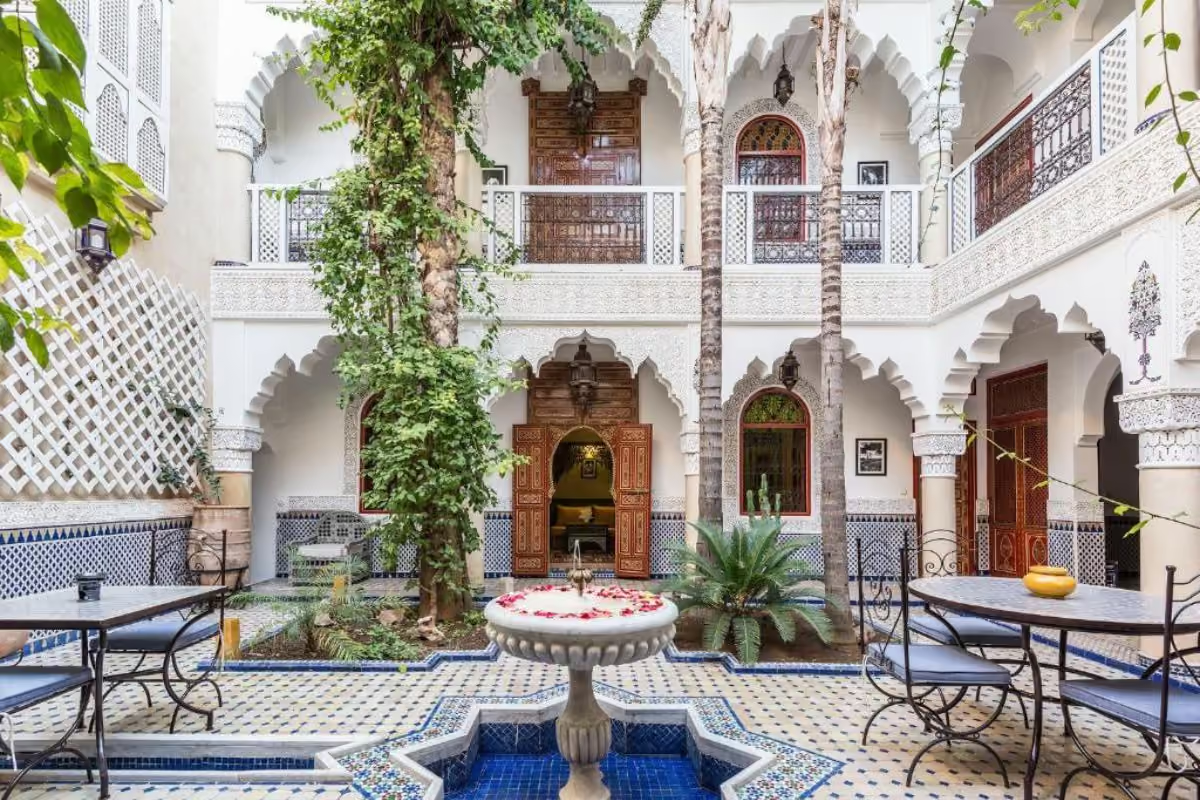
Morocco’s hotel market is characterized by a "dual-track" supply model, balancing large-scale international resorts with a thriving boutique sector centered on traditional heritage properties.
Marrakech remains the primary tourism engine of the country, accounting for roughly a quarter of Morocco’s total overnight stays and serving as the leading hub for luxury and experiential travel. Agadir and the wider Souss-Massa region continue to perform strongly as established coastal resort destinations, while Tangier is seeing sustained demand driven by its proximity to Europe, the expansion of Tangier Med Port, and infrastructure upgrades tied to the 2030 World Cup.
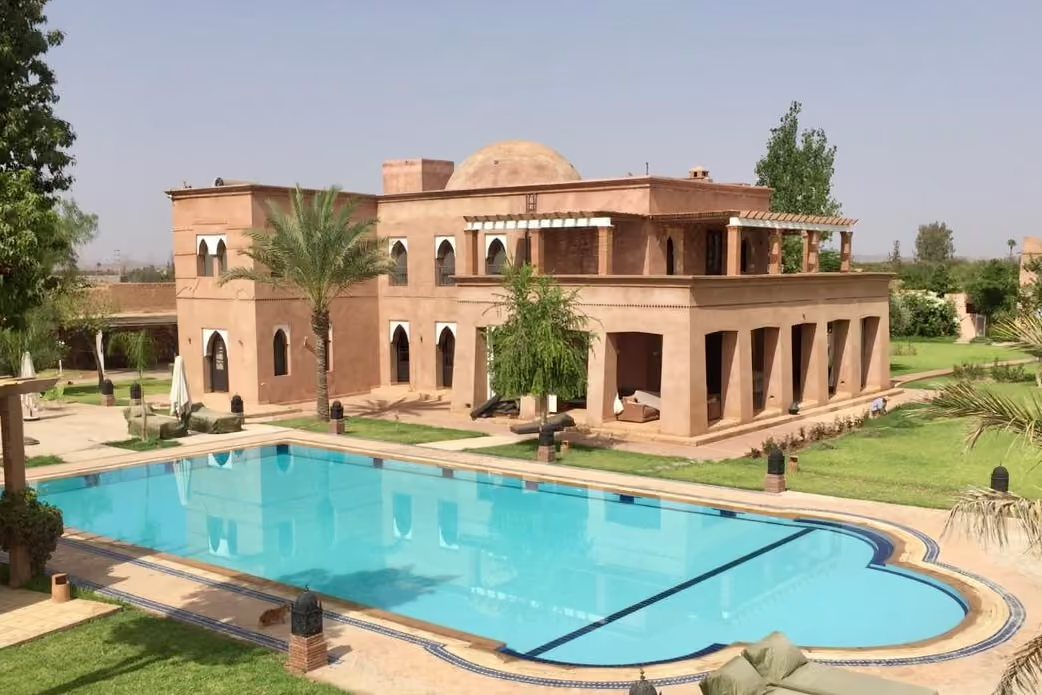
There is also increasing investor interest in the renovation of traditional riads in Marrakech and Fez, reflecting growing international demand for culturally immersive accommodation experiences.
Occupancy and Hotel Supply
Morocco’s hotel sector delivered solid performance throughout 2024, with national occupancy rates generally trending in the mid-60% range across the year, supported by strong demand in key urban and resort markets. Major destinations such as Agadir, Marrakech, and Rabat reported occupancy levels above the national average during peak periods.
Revenue per available room (RevPAR) recorded strong year-on-year growth, particularly in Marrakech, which maintains premium pricing power within the Moroccan market. Performance gains have been supported by rising average daily rates and a continued shift toward higher-spending international travelers from Europe and North America.
Transactions and Investments
The hospitality investment landscape is currently valued at approximately $10.26 billion as of 2025, with a projected growth rate (CAGR) of over 5% through 2031. To stimulate private sector participation, Morocco introduced a new Investment Charter in 2023, offering financial grants of up to 30% of total investment costs for eligible projects. Specialized programs like "Cap Hospitality" have been launched to subsidize interest on loans for the renovation of 25,000 hotel rooms, while the "Go Siyaha" initiative provides a 720 million MAD budget to modernize 1,700 tourism businesses by 2026. International chains currently hold a 52.74% market share, but independent boutique hotels and riads continue to command a sizable portion of the mid-range and luxury sectors.
Tourism and Visitor Statistics
Tourism receipts reached record levels in 2024, exceeding 110 billion MAD, reflecting strong visitor spending and improved yield management across major destinations.
Air connectivity continues to expand rapidly. Moroccan airports handled more than 32 million passengers in 2024, supported by route expansion from both national and low-cost carriers. Strategic agreements with airlines have broadened access to secondary cities such as Essaouira, Ouarzazate, Tangier, and Agadir, helping to distribute visitor flows beyond the Casablanca–Marrakech corridor.
Under the Airports 2030 strategy, Morocco is investing heavily in airport infrastructure to increase terminal capacity and accommodate a long-term target of approximately 26 million annual tourists by 2030.
In Summary
Morocco presents a compelling opportunity for hotel investors seeking exposure to a high-growth Mediterranean and African market. The sector benefits from sustained international arrival growth, government-backed investment incentives, infrastructure expansion linked to the 2030 World Cup, increasing demand for boutique and experiential hospitality, and relative political and macroeconomic stability within the region.
For investors targeting boutique riads, urban lifestyle hotels, or coastal resorts, Morocco offers a combination of structural demand growth, improving yield metrics, and institutional support mechanisms that help reduce entry barriers and renovation risk.

Tell us about your investment strategy and we will help you to find the best opportunities.
(Are you a seller? click here)