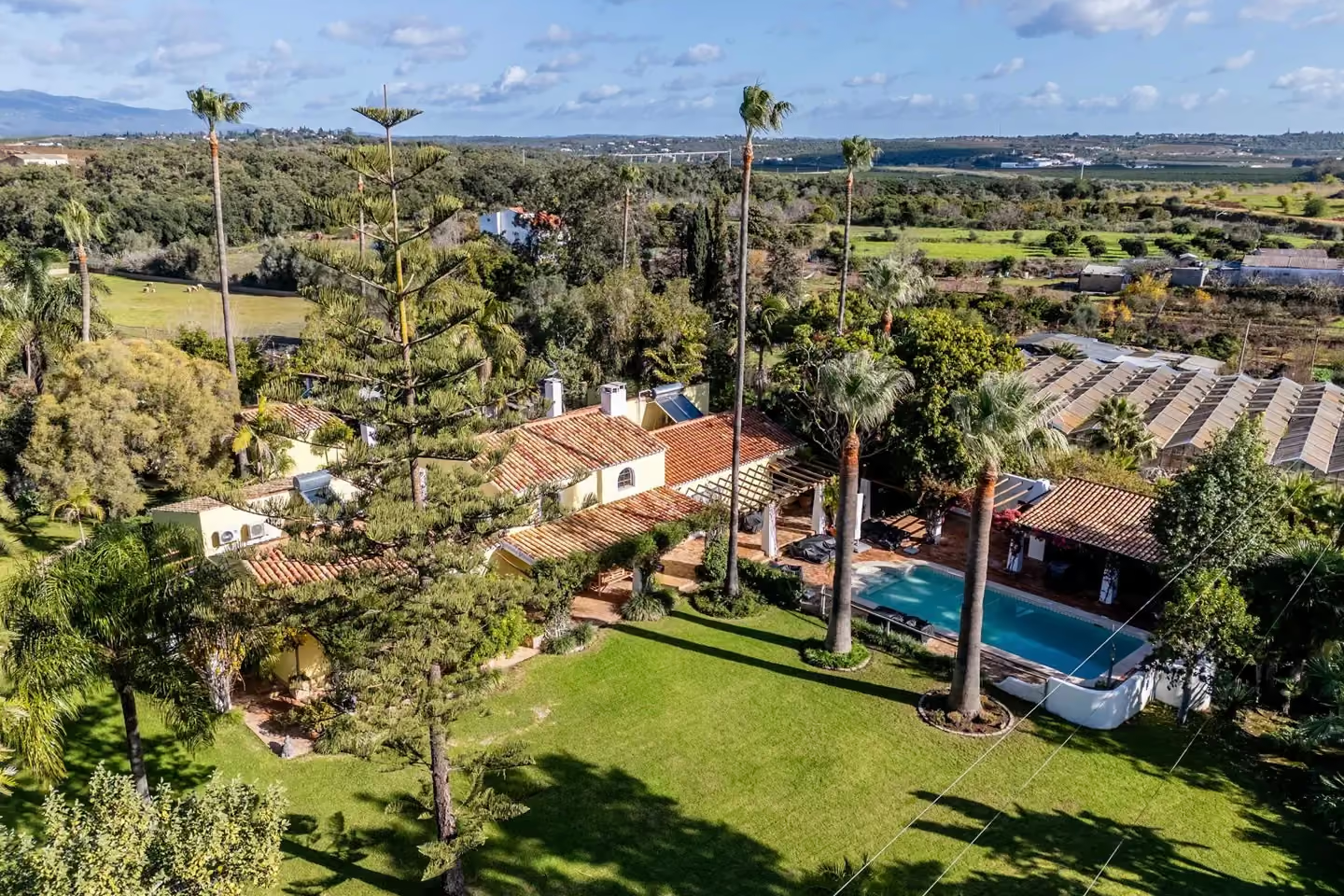
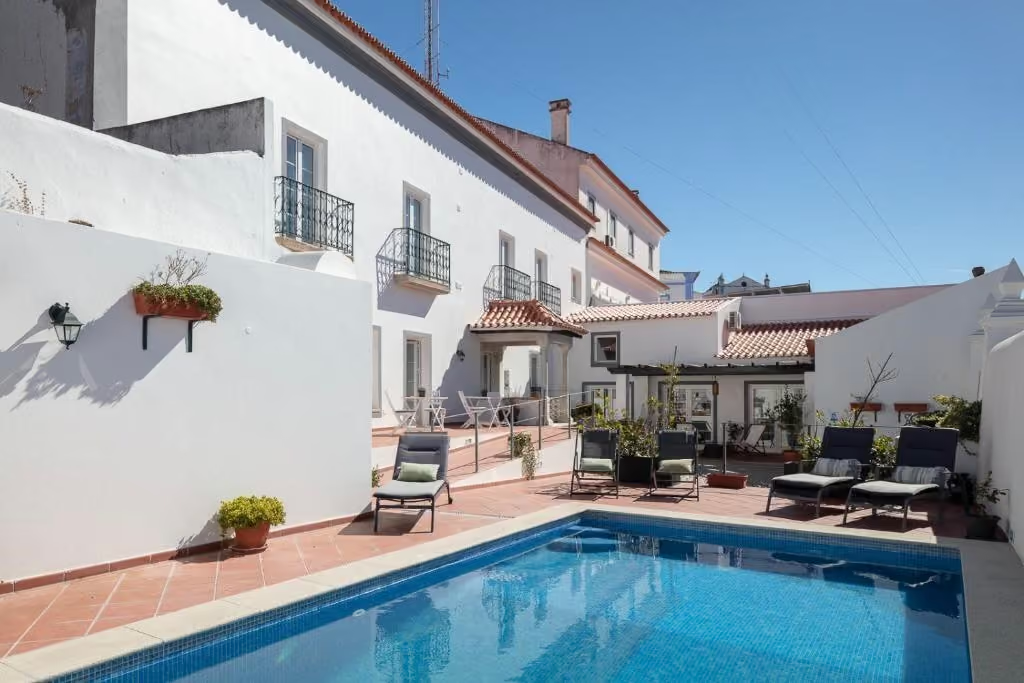
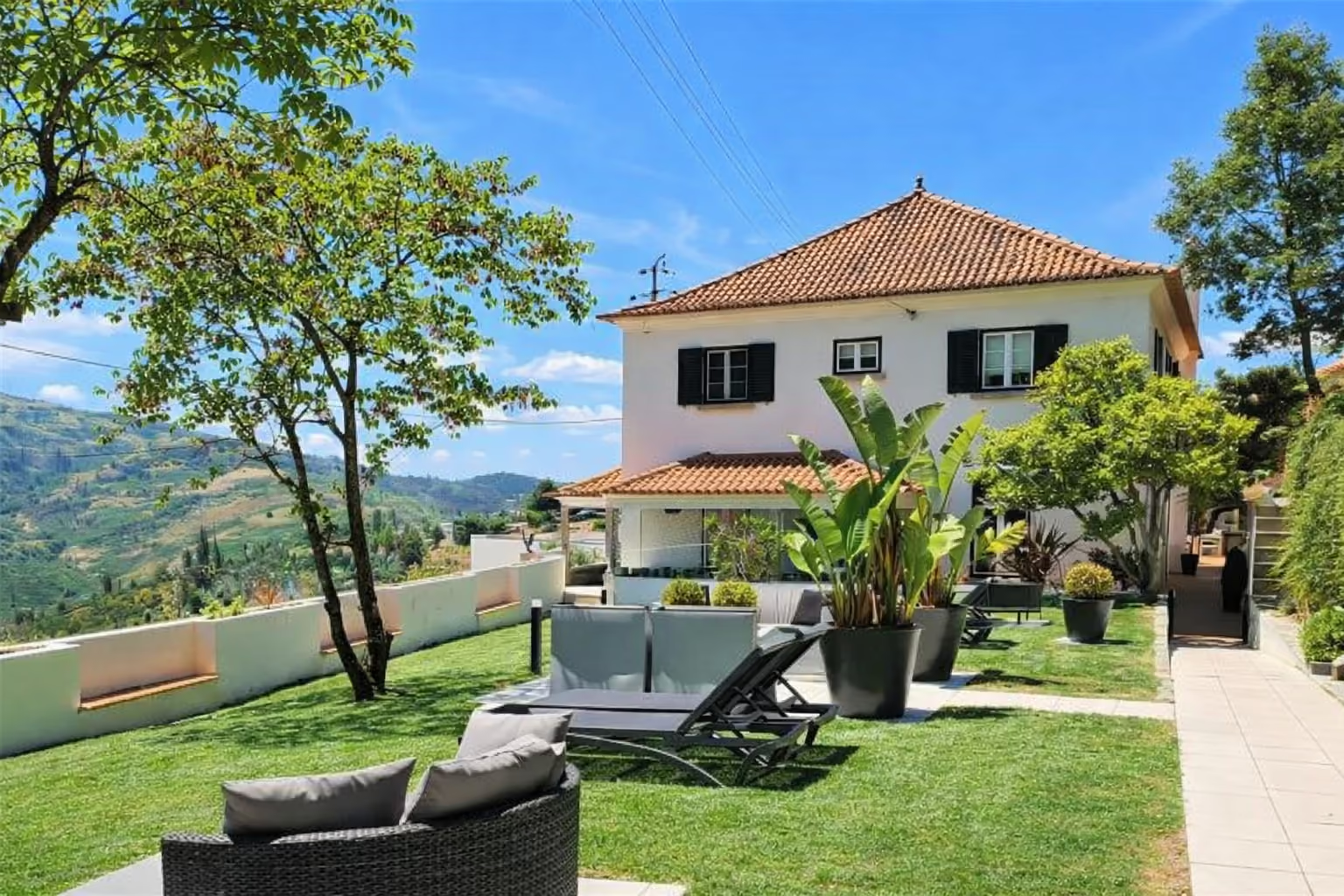
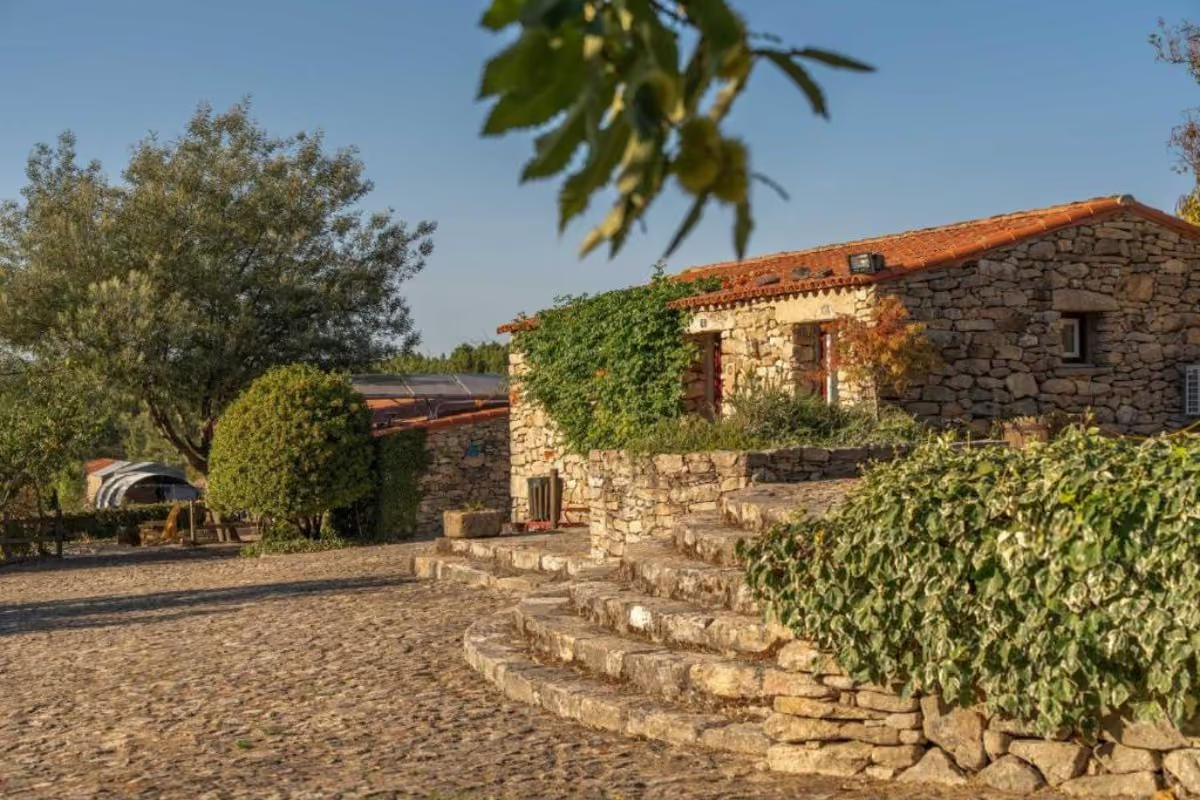
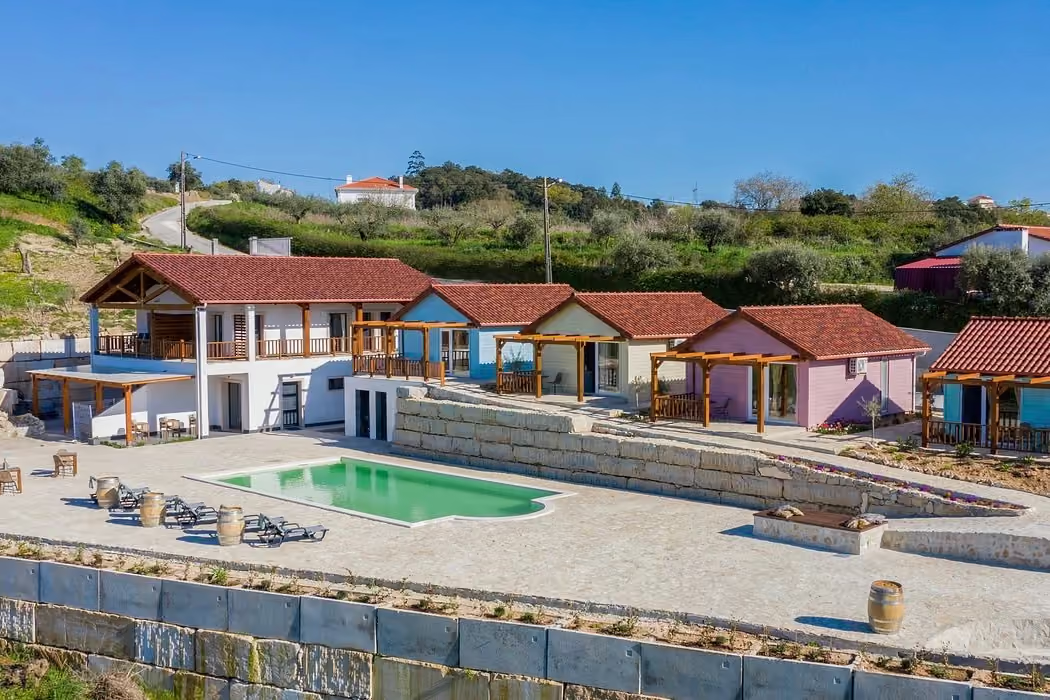
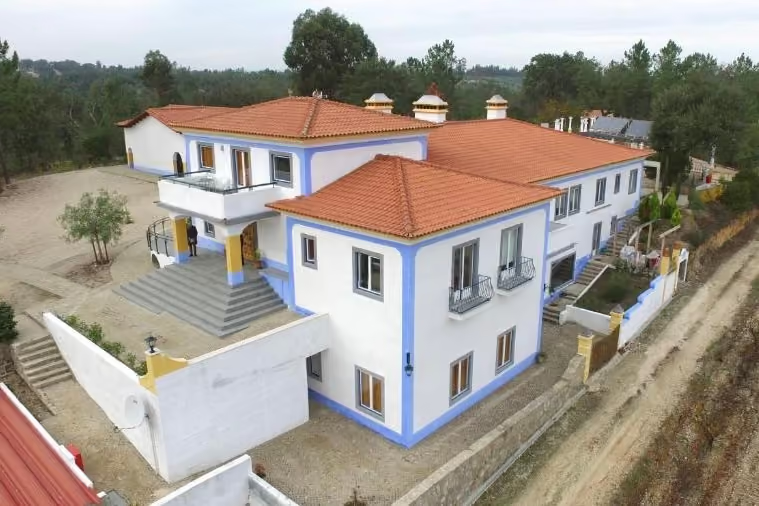
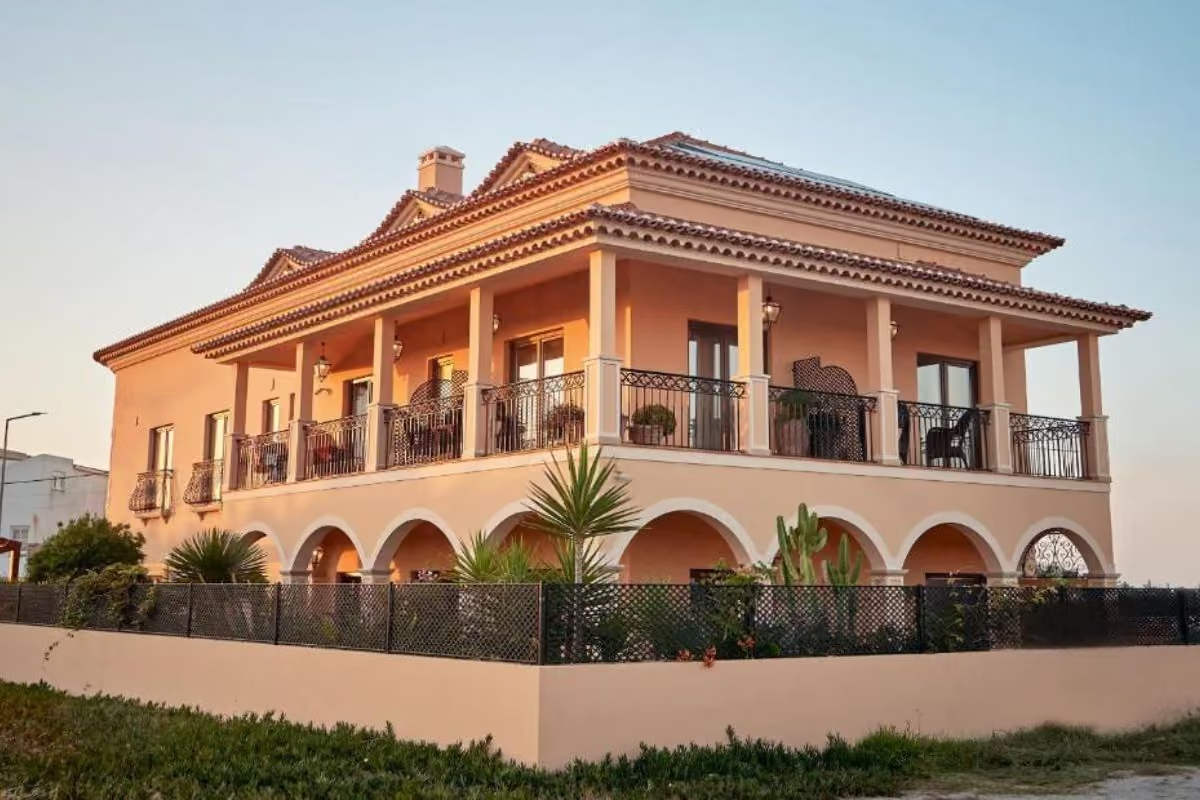
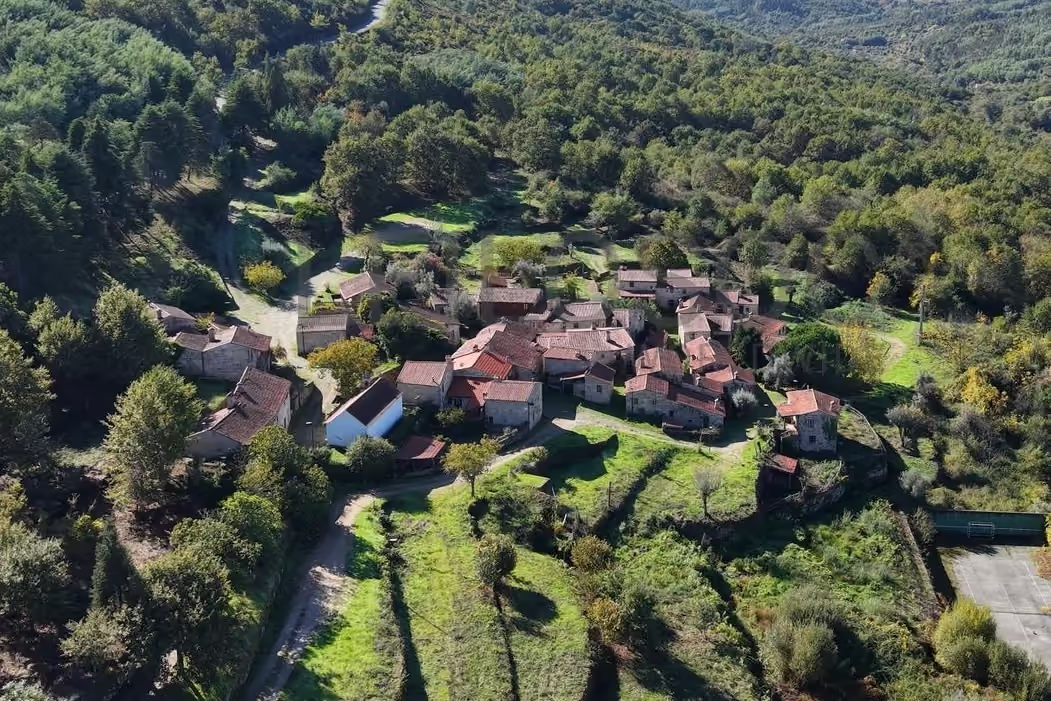
🕵️ We track public listings on real estate websites, curate them, and do some detective work to determine their future potential.
Portugal has become one of Europe’s most closely watched hospitality markets. Historic cities, Atlantic beaches, rural landscapes, and island destinations give buyers a broad choice of operating models, from urban boutique hotels to resorts and nature-led retreats.
For hotel investors, Portugal combines rising international demand with a relatively compact but varied accommodation base. Buyers can consider a city hotel in Lisbon or Porto, a beach or golf property in the Algarve, a rural retreat in the Alentejo, or a nature-focused hotel in Madeira or the Azores.
In 2024, Portugal welcomed approximately 29 million international visitors and generated €30 billion in tourism receipts. Tourism contributed 8.9% of GDP and employed 3.5% of the workforce in core tourism sectors. The country offered around 0.7 million beds across 8,100 accommodation establishments, including approximately 2,200 hotels.
Few European markets offer such a broad mix of city, coast, countryside, and island demand within a relatively compact country.
Portugal benefits from a globally recognized tourism brand built around historic cities, Atlantic beaches, food and wine, surfing, golf, nature, and a mild climate. This creates opportunities across established destinations and smaller regional markets rather than limiting demand to one type of trip.
One of the biggest attractions for hotel investors is the diversity of opportunities available. Buyers can choose between urban boutique hotels, guesthouses, aparthotels, coastal resorts, rural hospitality estates, wellness retreats, and nature-led island properties.
Portugal also demonstrated solid hotel pricing in 2024. Average daily rate reached approximately €138, up 7% from the previous year. Occupancy averaged 52%, producing RevPAR of around €72.
Another attractive characteristic is the importance of hotels within the accommodation mix. Hotels accounted for 74% of overnight stays, compared with 17% for short-term rentals and 9% for camping. The overall supply base remains relatively lean, with around 0.7 million beds and 2,200 hotels.
Portugal is not without challenges. July and August accounted for 26% of annual overnight stays, while the busiest month was 5.6 times stronger than the slowest. Tourism is also highly concentrated, with nearly 40% of all overnight stays occurring in Lisbon, Porto, and Funchal—one of the highest concentrations among European hotel markets. Local planning, licensing, staffing, and access conditions can also vary considerably between regions.
For buyers who carefully match the property, location, and operating model, Portugal offers a diverse hospitality market with growing international demand and opportunities across a wide range of budgets.
Portugal offers opportunities across established resort markets, major cities, rural regions, and Atlantic islands. The right location depends on your budget, preferred operating model, tolerance for seasonality, and target guest profile.
| Region | Best For | Typical Hotel Types | Advantages | Considerations |
|---|---|---|---|---|
| Algarve | Lifestyle buyers and resort operators | Boutique hotels, aparthotels, B&Bs | Strong international demand, established tourism infrastructure | Seasonal demand and mature competition |
| Lisbon & Cascais | Investors seeking year-round operations | City hotels, guesthouses, aparthotels | Business travel, city breaks, international air access | Competitive market and higher acquisition costs |
| Porto & Northern Portugal | City and lifestyle buyers | City hotels, wine hotels, rural guesthouses | Strong cultural tourism and Douro wine region | Lower demand outside Porto |
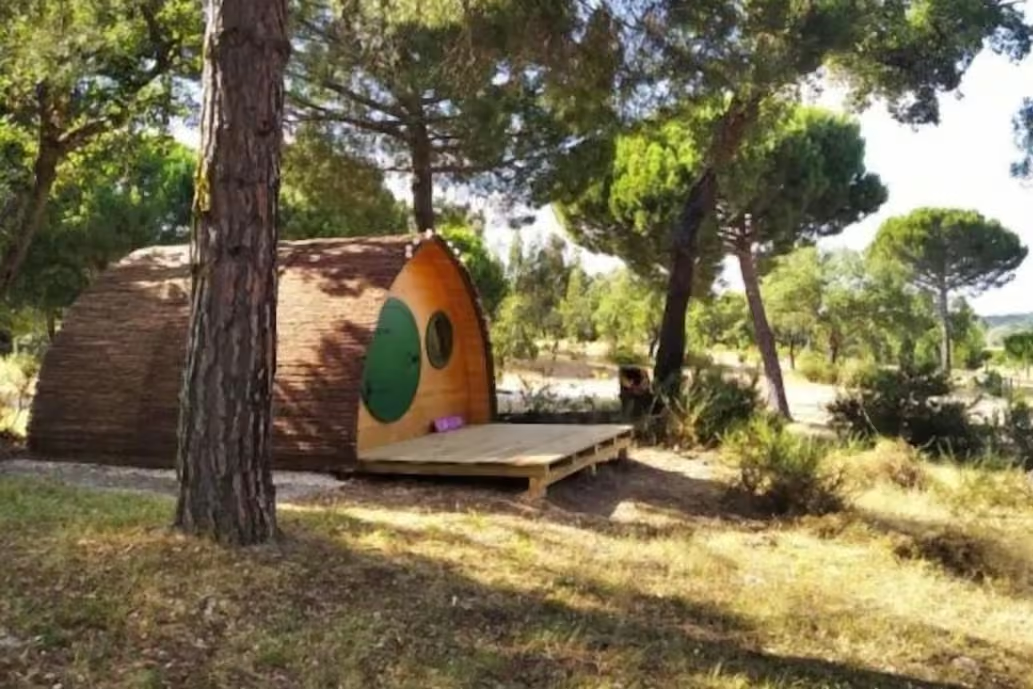
| Central Portugal & Silver Coast | Value-add and lifestyle buyers | Surf hotels, retreats, guesthouses | Lower entry prices and growing tourism demand | Less international visibility |
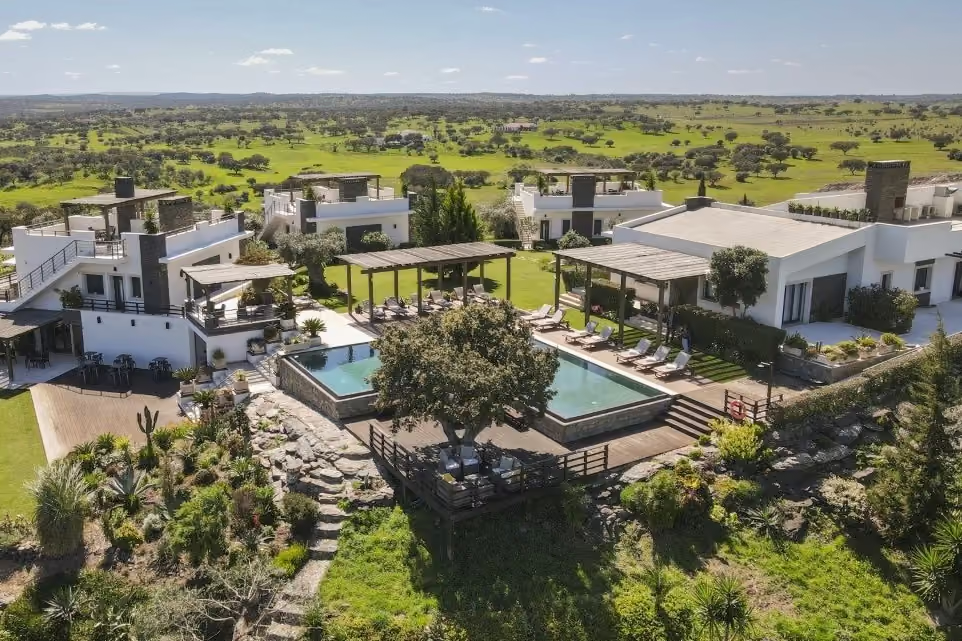
| Alentejo | Retreat and nature buyers | Rural hotels, eco-retreats, guesthouses | Large properties, nature tourism, lower entry prices | Lower occupancy and longer travel times |
| Madeira & Azores | Island and nature operators | Boutique hotels, eco-lodges, guesthouses | Unique island destinations and year-round appeal | Air access and smaller markets |
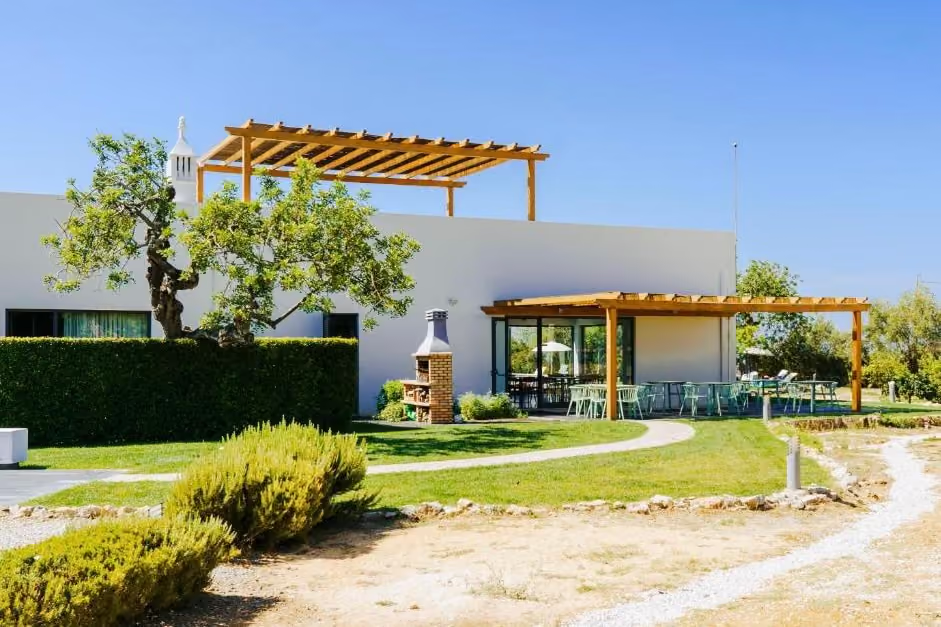
The Algarve is Portugal’s leading resort destination, combining beaches, golf, wellness, and one of the country’s strongest international tourism markets. Buyers can choose from boutique hotels, aparthotels, guesthouses, and established resort properties.
Lisbon offers one of Portugal’s strongest year-round hotel markets, supported by business travel, city breaks, conferences, and international tourism. The wider region, including Cascais, Estoril, and Sintra, combines urban hospitality with premium coastal destinations.
Porto is one of Portugal’s fastest-growing city destinations, while Northern Portugal offers wine tourism, rural hospitality, and nature-based experiences in regions such as the Douro Valley and Minho. The area appeals to buyers seeking a mix of urban and lifestyle hospitality opportunities.
Central Portugal & Silver Coast
Central Portugal combines Atlantic beaches, surf towns, historic cities, and rural landscapes, offering a wide range of hospitality opportunities at generally lower acquisition costs than Portugal’s primary tourism markets.
Alentejo is increasingly popular with buyers seeking rural hotels, wellness retreats, and nature-based hospitality businesses. Large estates, vineyards, and low-density landscapes make it well suited to lifestyle and retreat concepts.
Madeira and the Azores offer distinctive island hospitality markets centred on nature, outdoor activities, and year-round tourism. They attract buyers looking for boutique hotels, eco-lodges, and guesthouses in destinations with a strong sense of place.
The cost of buying a small hotel in Portugal varies significantly depending on location, room count, condition, seasonality, and proximity to the coast.
While every property is different, the following ranges provide a useful benchmark for buyers evaluating hotels for sale in Portugal.
| Budget Range | Typical Opportunities | Example Opportunity |
|---|---|---|
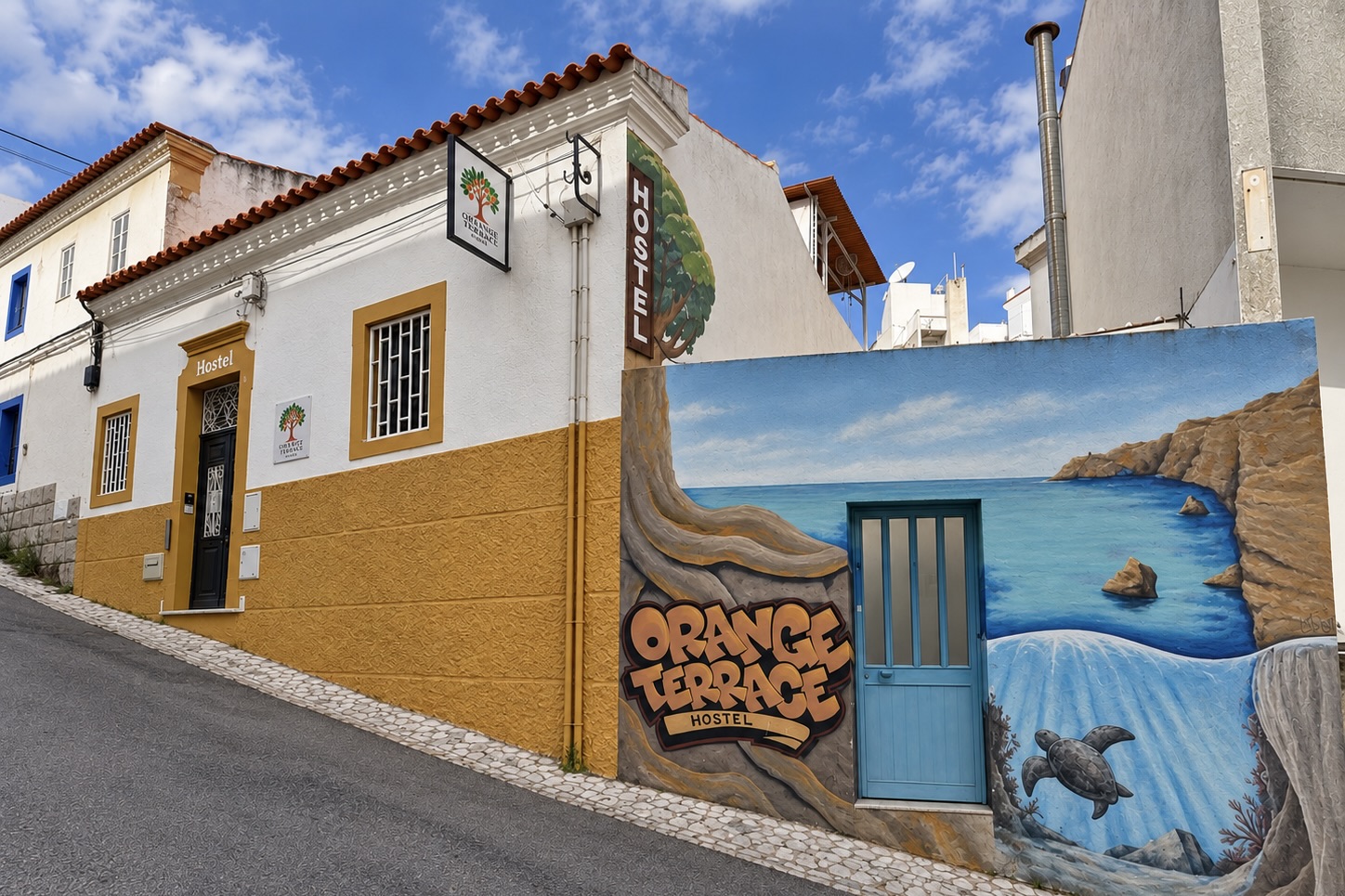
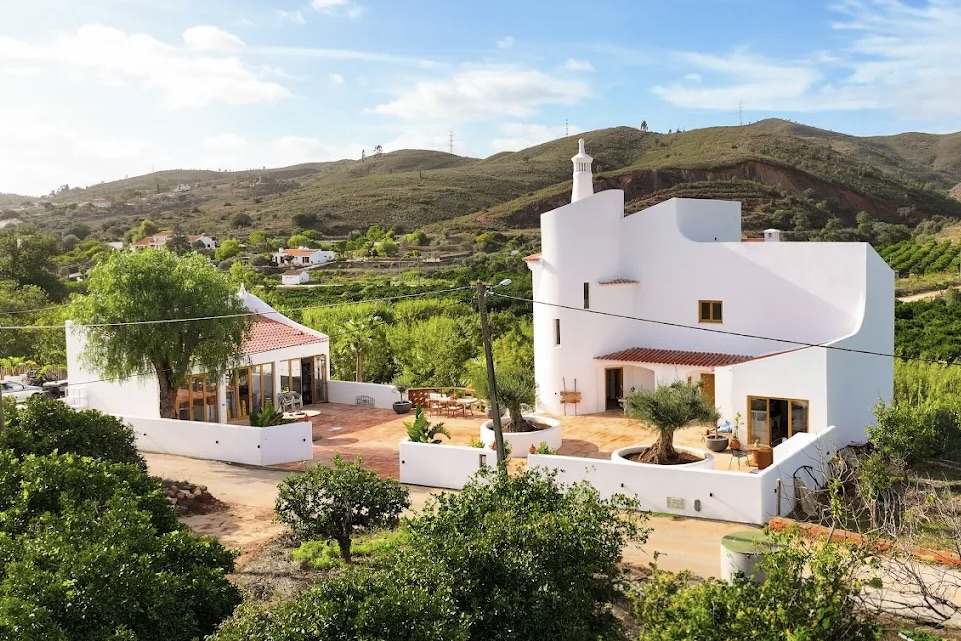
| Under €1M | Guesthouses, hostels, small rural or coastal hotels, renovation projects | Old Town Hostel in Albufeira (€950k) or Eco Retreat Near Coruche (€820k) |
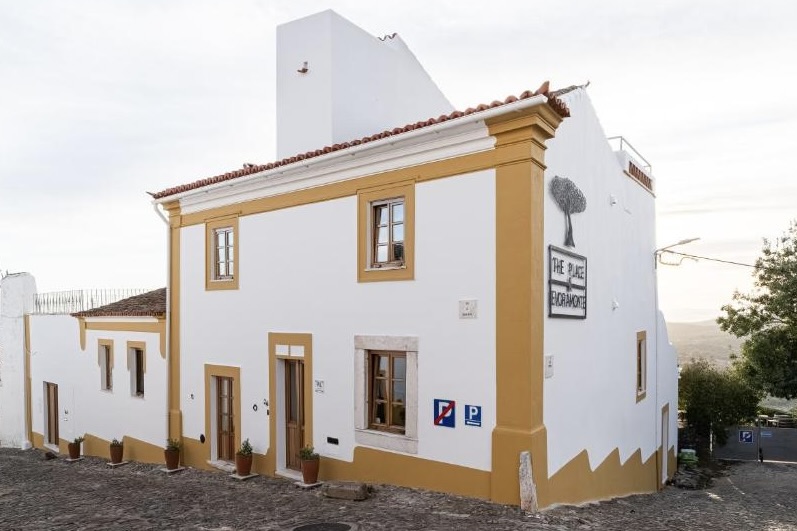
| €1M – €2M | Boutique guesthouses, small beach or riverside hotels | Courtyard Guesthouse in Arraiolos (€1.3M) or Mountain View Estate & Spa in Arganil (€1.675M) |
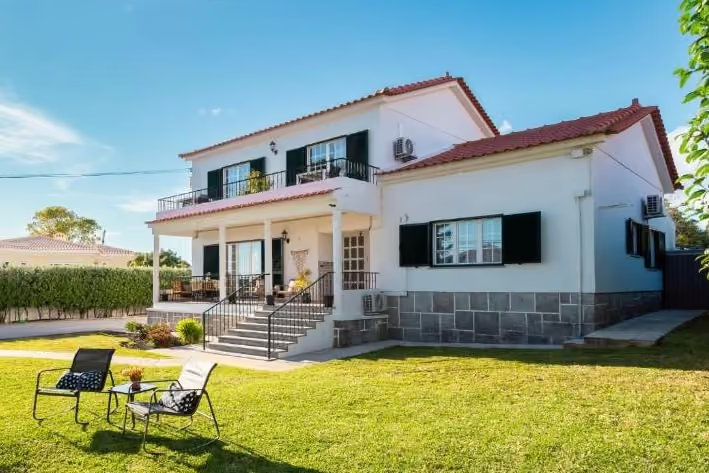
| €2M – €5M | Established boutique hotels, resorts, larger rural or coastal assets | Elegant B&B Near Faro (€2.48M), Boutique Riverside Quinta Near Albufeira (€2.75M), or Luxury Nature Retreat in Castro Verde (€3.95M) |
| €5M+ | Larger full-service or premium hospitality assets | Scenic Countryside Hotel in Viseu (€5.2M) |
Based on hospitality businesses currently listed on Buy That Hotel in Portugal, the typical opportunity is a small to mid-sized hotel with approximately 14 rooms.
Current listings have an average asking price of approximately €2.1 million, with a median asking price of €1.8 million. Many properties are independently operated boutique hotels, guesthouses, and rural tourism businesses rather than large branded hotel assets.
Looking beyond headline asking prices, the average listing is marketed at approximately €162,000 per room, with a median of around €148,000 per room.
Property sizes vary considerably, but the average listing offers approximately 1,907 m² of built space. Across current listings, the average asking price is around €2,400 per m², with a median of approximately €1,950 per m². As listings may report built area, land area, or the overall site, these figures should be used as broad benchmarks rather than directly comparable metrics.
As with any hospitality investment, location, operating season, licensing, property condition, and development potential can have a significant impact on value. As a result, two hotels with similar room counts may represent very different investment opportunities.
Buying a hotel in Portugal is generally straightforward, but investors should pay close attention to property compliance, tourism licensing, and ownership structure during the acquisition process. Many of the biggest risks relate to planning, licensing, and ensuring the property matches its official records.
One of the first steps is confirming that the property’s legal documentation is complete and consistent with the existing hotel. Buyers should review the Certidão do Registo Predial, Caderneta Predial, Licença de Utilização, and Energy Certificate, together with any mortgages, liens, or other registered encumbrances.
It is also important to verify that guest rooms, pools, terraces, restaurants, staff accommodation, and any later additions have been properly approved and recorded. Heritage protection, coastal regulations, or protected-area restrictions may also affect future renovations or expansion.
Discrepancies between the registered property and the existing hotel can create complications during financing, renovation, resale, or licensing.
Hotels in Portugal should hold the appropriate tourism registrations and operating permits. Buyers should confirm whether the property operates as an empreendimento turístico registered in the Registo Nacional dos Empreendimentos Turísticos (RNET) or under the separate Alojamento Local framework, and ensure that the registrations remain valid and reflect the property’s current operation.
Particular attention should be paid to hotel classification, approved capacity, fire safety certification, swimming pool requirements, and food and beverage operations, especially when purchasing older properties.
Annual revenue figures rarely tell the full story in Portugal. Although demand is relatively well distributed throughout the year, July and August still account for approximately 26% of annual overnight stays, and seasonality varies considerably between the Algarve, Lisbon, Porto, Madeira, the Azores, and inland regions.
Review monthly occupancy, ADR, RevPAR, and revenue for at least the previous three years to understand shoulder-season demand, dependence on OTAs or tour operators, and the length of the operating season.
Staffing challenges vary across Portugal, particularly in rural areas, resort destinations, and island markets where seasonal recruitment and employee accommodation can be more difficult. Buyers should understand employment obligations, staffing costs, and retention before completing an acquisition.
Accessibility is equally important. Airport connectivity, road infrastructure, and ferry services for Madeira and the Azores can all influence occupancy levels, operating costs, season length, and long-term investment performance.
Most hotel transactions in Portugal involve a lawyer, engineer or architect, accountant, and notary or solicitor. Foreign buyers will generally require a Portuguese NIF before purchasing property. Before completing an acquisition, buyers should obtain legal, technical, and tax advice from professionals familiar with Portuguese hospitality assets, particularly when purchasing older hotels, coastal properties, or businesses operating under the RNET or Alojamento Local frameworks.
Can foreigners buy hotels in Portugal?
Yes. Foreign investors can purchase hotels and hospitality properties in Portugal, subject to standard legal and tax requirements. Buyers will generally require a Portuguese NIF and should obtain local legal and tax advice before completing an acquisition.
Is Portugal a good country for hotel investment?
Portugal combines strong international tourism demand, excellent air connectivity, and a diverse range of hospitality markets, from city hotels and beach resorts to rural retreats and wine tourism. The country offers investment opportunities across a wide range of budgets and operating models.
What is the best place to buy a hotel in Portugal?
There is no single best location. The Algarve suits resort and lifestyle concepts, Lisbon and Porto provide stronger year-round city demand, while Central Portugal, the Alentejo, Madeira, and the Azores appeal to buyers seeking rural, wellness, or nature-based hospitality businesses.
How much money do I need to buy a hotel in Portugal?
Opportunities can be found below €500,000, although pricing varies significantly depending on location, size, property type, and condition. Many small boutique hotels and guesthouses are available below €2 million, while premium coastal assets can command substantially higher prices.
Can buying a hotel in Portugal qualify me for residency?
Not through the property purchase alone. Portugal’s current residency-by-investment rules no longer include direct real-estate acquisition. Hospitality investments may qualify only if they meet another eligible investment route under the regulations in force at the time. Buyers should always seek current immigration advice before investing.
Can I live in the hotel I buy in Portugal?
Possibly. Many boutique hotels, guesthouses, and rural tourism businesses include owner accommodation or can be operated as lifestyle businesses. Buyers should ensure that residential use is permitted and note that owning a hotel does not automatically grant Portuguese residency.
Is Portugal a seasonal hotel market?
Yes, although seasonality varies significantly by destination. The Algarve experiences pronounced summer demand, while Lisbon, Porto, and Madeira generally benefit from more balanced year-round tourism.
What should I check before buying a hotel?
Pay particular attention to property records, planning compliance, tourism registrations, ownership structure, historical trading performance, staffing requirements, and any unapproved alterations or extensions. For coastal and island properties, it is also worth reviewing accessibility, environmental restrictions, and future capital expenditure requirements.
How long does it take to buy a hotel in Portugal?
Most hotel transactions take several months, depending on the ownership structure, financing, legal due diligence, licensing, and the complexity of the transaction.

Tell us about your investment strategy and we will help you to find the best opportunities.
(Are you a seller? click here)
.png)
.png)


.avif)