
Selling a hotel is not the same as selling a house.
This sounds obvious, but many hotel owners approach the sale exactly this way: they find someone who sells real estate, give them the listing, and wait for buyers.
One or two years later, they realize nothing is happening.
The problem is that there are very different types of brokers in the hotel market. Each has a different network, business model and type of property they are good at selling.
Here is how I divide them.
Think CBRE, JLL, Cushman & Wakefield, Colliers and other large international real estate consultancies.
These are the big guys.
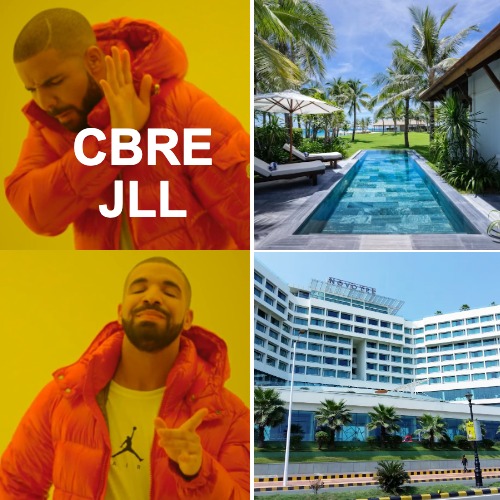
They have offices around the world, huge investor networks and sophisticated teams covering every part of commercial real estate. Hotels are one of those parts.
But they typically don't talk to small fish.
Their sweet spot is larger city hotels, apartment buildings, resorts and institutional-quality properties. They like working with hotel chains, family offices, funds, developers and other clients who can bring them repetitive business.
If you own a 12-room countryside hotel, they are probably not the right partner for you.
And they probably won't be particularly interested in talking to you either.
Their business model is bigger than the transaction.
One interesting thing about these large firms is that selling your hotel might be only a small part of what they want to do with you.
They can advise on renovations, repositioning, development, financing, valuations, finding an operator and negotiating hotel management agreements.
Because of this, they can sometimes charge surprisingly low commissions for the transaction itself. The sale can be the beginning of a much larger and longer commercial relationship.
For the right property, that's extremely valuable, but for a small independent hotel, it's usually overkill.
This is probably the most common choice among owners of small countryside hotels.
"Cousin Alberto" doesn't literally need to be your cousin.
Maybe he works at RE/MAX. Maybe he owns a small local real estate agency. Maybe he's a friend of a friend.
You run a hotel, not a real estate company, so your thinking is logical:
Alberto knows real estate. I'll ask Alberto to sell my hotel.
There is just one problem.
Alberto might have sold 200 apartments, 50 villas and 20 plots of land.
Probably not, but anyway... he has sold zero hotels.
And selling a hotel is a very different process.
Hotel buyers analyze operations, EBITDA, ADR, occupancy, capex, management structures, licenses, real estate value and future potential. The buyer universe is also completely different from residential real estate.
Your local broker might look professional and genuinely believe he knows how to sell your property.
That doesn't make him a hotel broker and you can easily spend a year or two discovering this.
There is one situation where Cousin Alberto can be excellent.
If your most likely buyer is local, a good local agent can actually be your best option.
Imagine you own a small countryside hotel.
Potential buyers could include:
Your local agent might know all of them. That's incredibly valuable.
The worst combination, however, is hiring a local agent and then forbidding them from using their local network because you don't want anyone nearby to know your hotel is for sale.
Now you've removed their biggest advantage.
Instead of calling the 20 people they actually know, they're sitting behind a laptop trying to find foreign hotel investors on Google and sending cold emails.
That's usually not going to work.
For many independent hotel owners, this is the most interesting category.
These are professionals who specialize in buying and selling hotels but don't work for one of the giant consultancy firms.
They might have previously worked for CBRE or JLL. They might come from a hotel chain, family office, investment company or hotel development business. Eventually, they went independent.
The good ones combine several useful things:
And at the same time, they think beyond the local market.
They are also generally less picky about deal size than the large consultancies and can be more cost-effective.
For a small or medium-sized independent hotel, this can be a very good combination.
At BuyThatHotel.com, we work with independent brokers in different markets. If your main objective is simply to sell your hotel, we can connect you with a broker based on the property type and location.
There are two things I would pay particular attention to when evaluating them: their investor network and their integrity.
The second one matters more than many owners realize. There are plenty of sharks in this industry.
You want somebody you can trust during a process that could easily take a year or longer and involve one of the largest financial transactions of your life.
This is a relatively new and still niche category.
You'll recognize these people because they're everywhere: LinkedIn. Instagram. YouTube. TikTok.
They make property tours, drone videos, investment analysis and beautiful posts about hotels for sale. And some are very good at it.
But there is an important distinction:
Being excellent at creating content doesn't automatically make someone excellent at selling hotels.
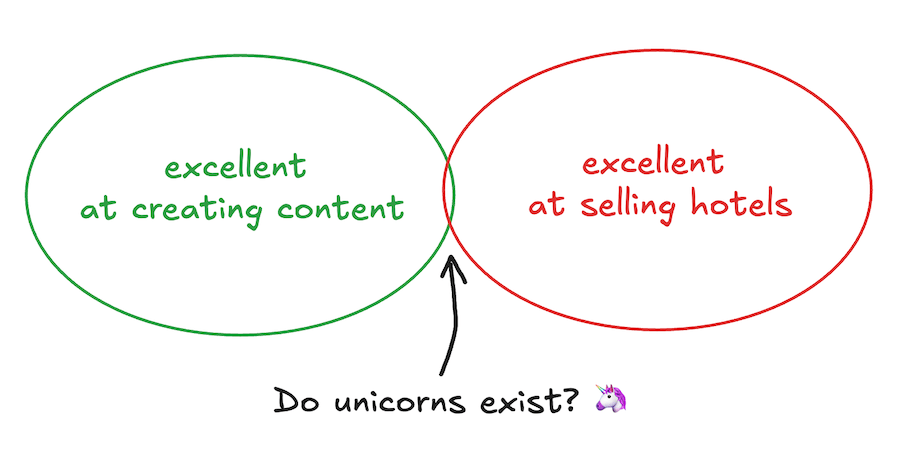
Their real strength is often storytelling and marketing = they can still be extremely valuable.
A social media creator can help position your property, create a compelling story around it and expose the opportunity to thousands of people.
You don't necessarily have to choose between an influencer and a traditional broker either.
You can have an experienced hotel broker running the transaction while working with a creator to promote the property and expand its reach.
Just understand where everyone's strengths are. For some creators, content is the core business and brokerage is secondary. Don't confuse visibility with transaction experience.
At some point, almost every hotel owner thinks about this: Why should I pay someone else?
You know your hotel better than anyone, you know hospitality, you probably understand at least something about real estate, and you know the local market.
So why not sell it yourself?
Well, there are certainly advantages. You save the broker's commission and maintain complete control over the process.
But there's one fairly significant disadvantage: You've probably never sold a hotel before.
Think about making a sophisticated French pastry for the first time.
Some things require repetitions.
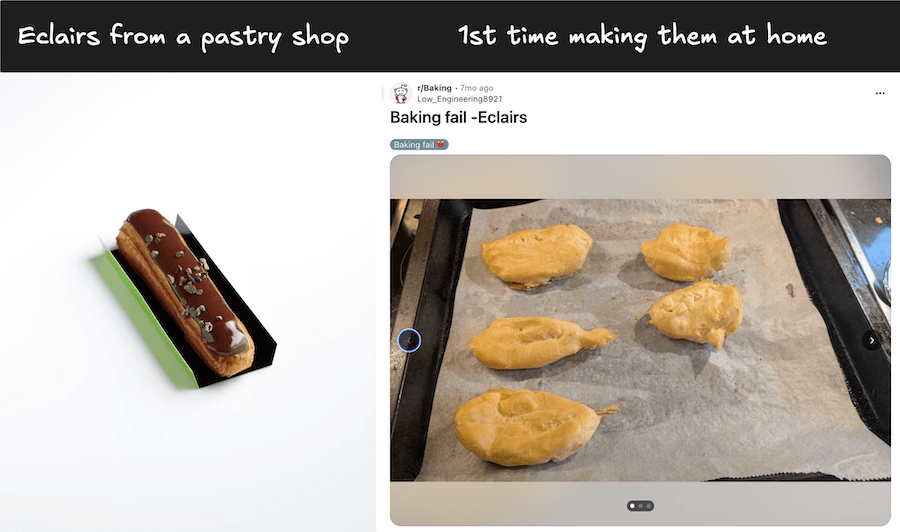
Hotel transactions are one of them.
You already have a full-time job
There is another problem that I think is even more important.
Owners usually start with an optimistic timeline: We'll sell it within six months.
Six months pass, then nine, then twelve.
Potential buyers disappear, offers fall apart, due diligence raises new questions, financing doesn't come through. Someone who sounded extremely serious suddenly stops replying.
The process starts draining your energy.
And something dangerous can happen: You stop focusing on the hotel.
Operations suffer, revenue drops, reviews get worse, maintenance gets postponed.
And now, when a serious buyer finally appears, they're looking at worse numbers than when you started the process.
You've just given them more negotiating power and that's exactly the opposite of what you want.
While somebody else is running the sales process, your job should be to make the hotel perform better.
Finding a good broker is surprisingly difficult.
There aren't that many of them. The really good ones are often busy. Ironically, the weaker ones might have much more time to spend convincing you how good they are.
So how do you tell the difference?
I would ask three questions:
Question #1: How many hotels have you actually sold?
Not villas, not apartment buildings, not restaurants. Hotels.
This question eliminates a surprising number of candidates.
A real estate agent can have 20 years of experience, an impressive website and hundreds of transactions behind them... and still have sold exactly zero hotels.
If the answer is zero, I would generally pass.
Question #2: Tell me the story of the last hotel you sold.
Don't just ask for the name and transaction value.
Ask them what happened:
Then listen carefully. Selling a hotel is a roller coaster.
Someone who has genuinely led hotel transactions can usually talk about them for hours. They'll remember the strange problems, difficult negotiations, buyers who disappeared and deals that almost collapsed.
If all you hear is a polished three-minute story without much detail, dig deeper.
It's similar to interviewing someone for a senior executive position.
Two candidates can both say they "worked on" a major project. Once you ask detailed questions, it becomes obvious who actually led it and who happened to be in the room.
Question #3: Can I speak to one previous client?
You don't need ten references. Ask for one.
Ideally, speak with a hotel owner whose property they sold.
The first test is simply whether they're able and willing to provide the reference.
If they can't provide a single person who is prepared to talk about working with them, that's a major red flag.
If they can, that's already a good sign. Then have a conversation with that owner.
Don't expect them to tell you everything was perfect. Hotel transactions are long, complicated and frustrating.
The question is simpler: Would they hire this broker again?
If the answer is yes, you've learned something useful.
Don't approach this as if you're recruiting from a pool of 20 equally qualified candidates.
Good hotel brokers are difficult to find.
And the best broker isn't necessarily the person with the fanciest website, biggest company or largest social media following.
You need somebody who understands your type of hotel, knows your market, has access to the right buyers, and (most importantly) is somebody you trust to represent you through a long and complicated transaction.
For a 150-room city hotel, that might be one of the Big Dogs.
For a small hotel whose natural buyer is another entrepreneur from the region, cousin Alberto might actually be perfect.
For many independent hotels somewhere in between, a specialized independent hotel broker can be the sweet spot.
Peter Fabor is a hospitality entrepreneur with 15+ years of experience building niche businesses across hotels, coliving, coworking, retreats, and hospitality tech. He is the founder of Surf Office, Buy That Hotel, Hotel Nuggets, and Pingotel. His work focuses on identifying underserved hospitality markets and building businesses around them.