Coliving is no longer just for backpackers with MacBooks. What began as a niche experiment for digital nomads in the 2010s, has grown into an $8 billion global industry.
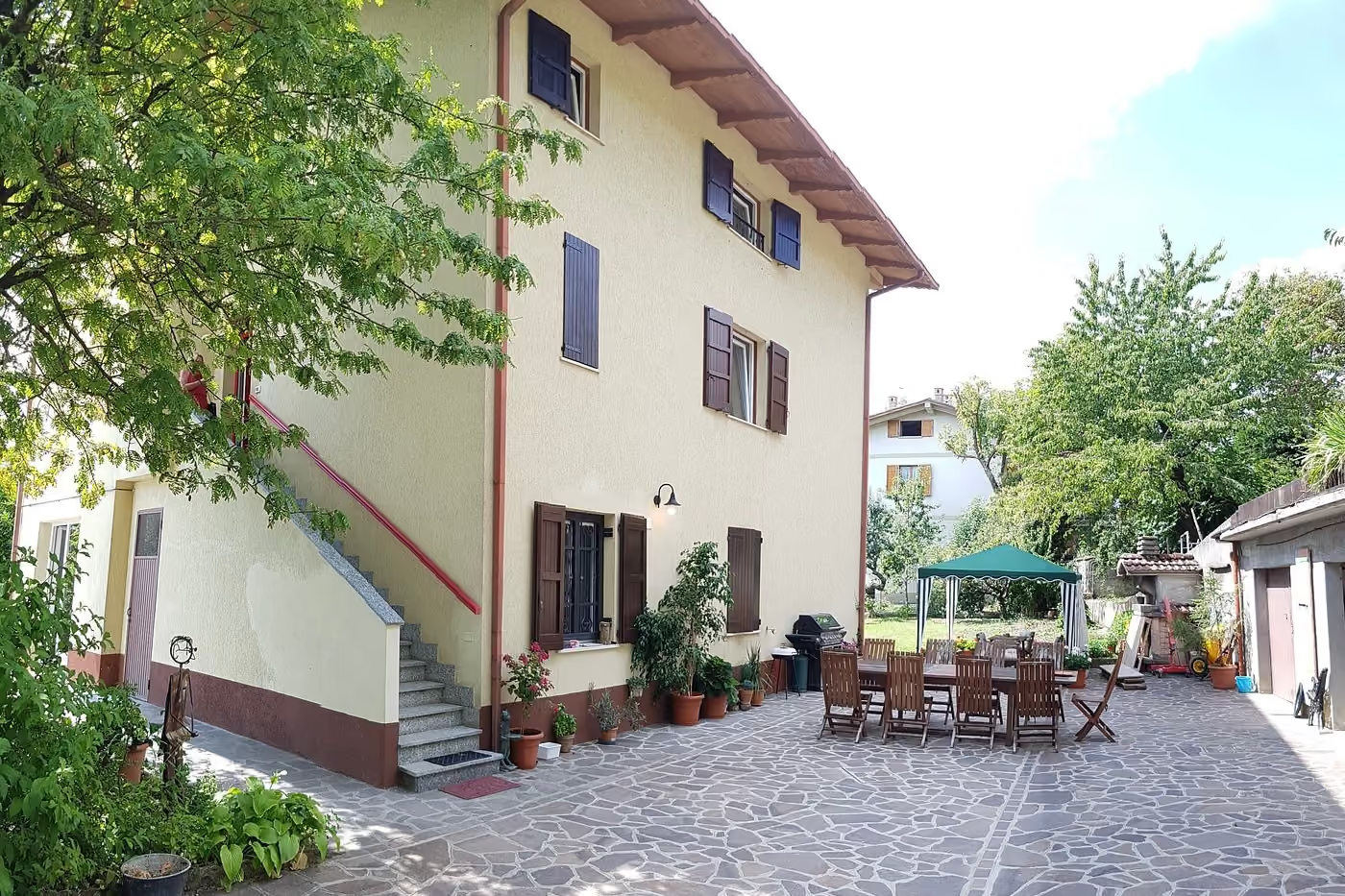
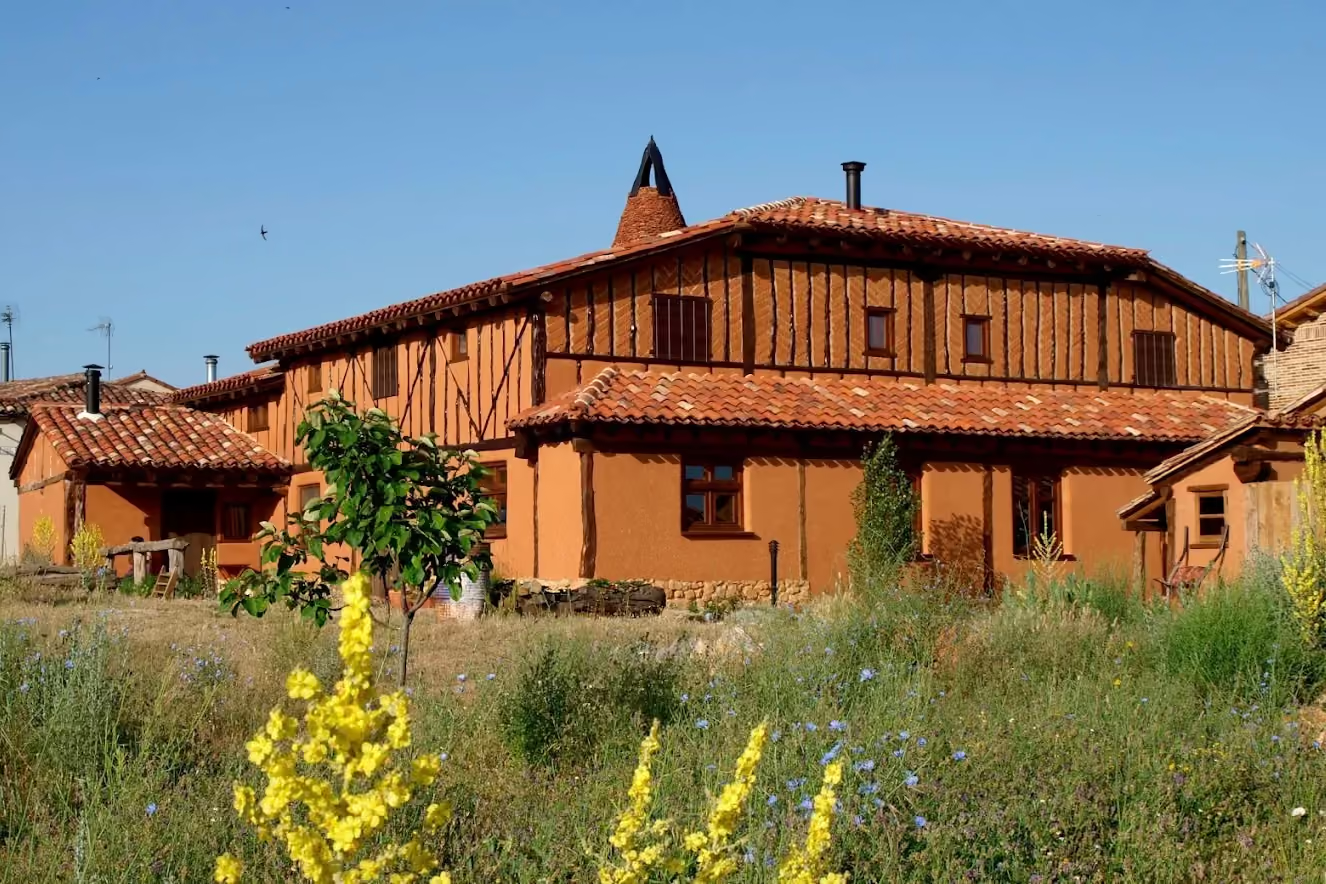
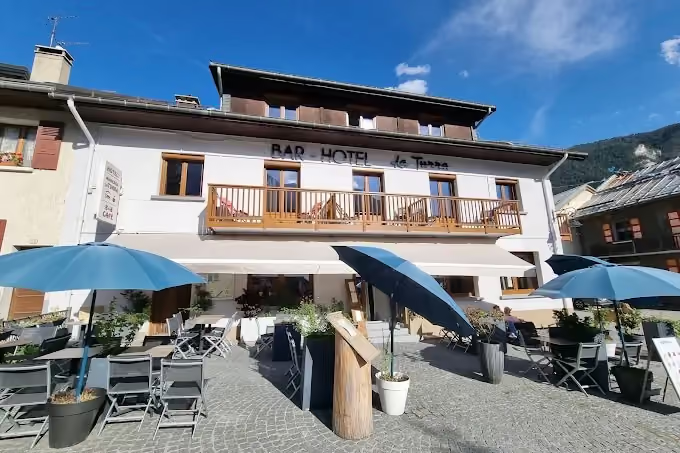
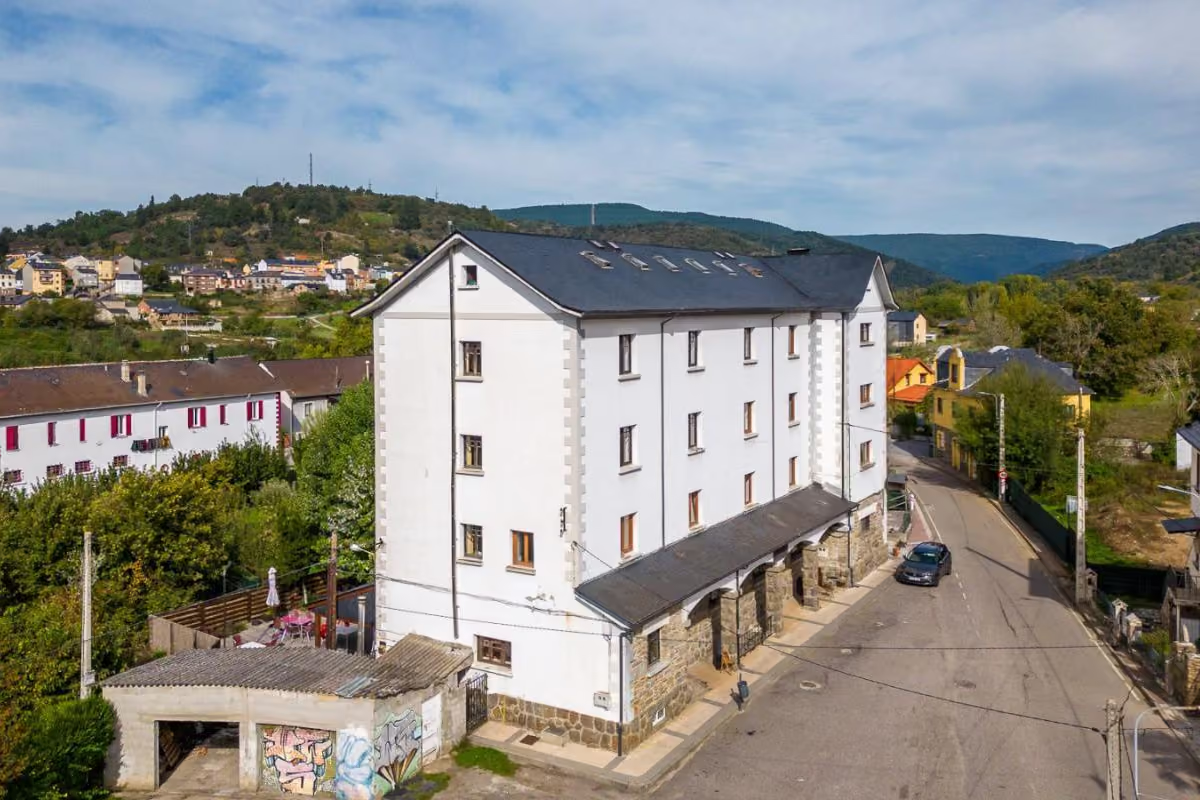
Here we are going to focus on a small niche: community coliving spaces in Europe. Mainly in the countryside locations. The concept is simple: private rooms with shared spaces and amenities. One operator manages everything (maintenance, community, and daily needs), so guests can focus on work and connection.
We analyzed TOP40 of such coliving spaces to understand what makes them successful. Based on that data, we identified patterns that helped us determine which hotels for sale could work well as coliving spaces.
Coliving has become one of the more interesting niche hospitality models in Europe. It sits somewhere between a hotel, hostel, shared house, and community-driven lifestyle product. But what actually makes a coliving space successful?
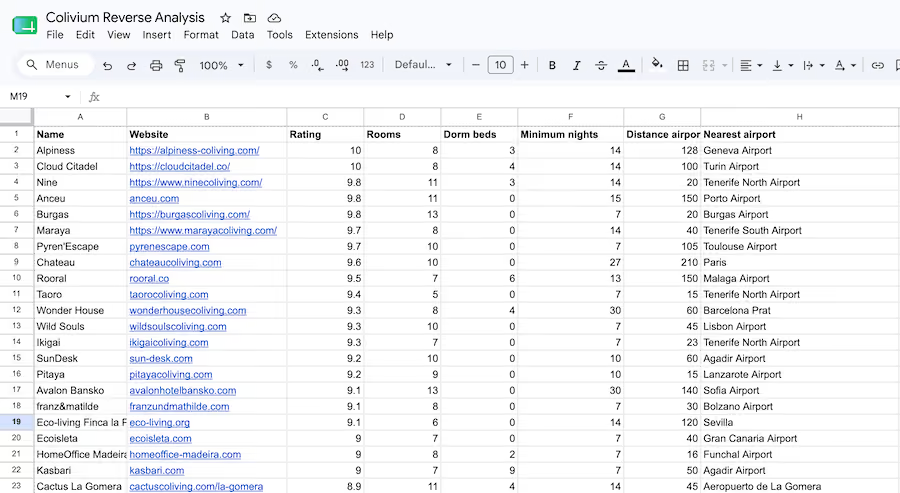
To better understand this, I looked at data from Colivium.co, a website that maps community coliving spaces across Europe and rates them using Google Maps reviews and its own transparent scoring formula.
I downloaded the data, added extra information, and tried to identify patterns among the highest-rated coliving spaces.
One of the first things that stood out was the size of successful coliving spaces.
Many of the highly rated coliving spaces in the dataset are surprisingly small. The average number of rooms was around 8. In traditional hospitality, that is usually a difficult size. Hotels with fewer than 15 rooms are often hard to operate profitably unless they are positioned as luxury properties or command very high nightly rates.
Small hotels still have fixed costs: cleaning, check-ins, guest communication, maintenance, marketing, operations, and staff time. With short-stay tourism, those costs can quickly eat into the margins.
But coliving changes the economics.
Most coliving spaces do not operate like regular hotels. Guests are often required to stay for a minimum number of nights (commonly 14, 21, or 30). This is one of the most important differences between coliving and traditional hospitality.
Longer stays reduce operational intensity:
Instead, a small property can operate with fewer guests, fewer transitions, and more stable occupancy.
This is also important for the community side of the business. If people are rotating every two or three nights, it is very hard to build a real community. Longer stays give guests enough time to meet each other, build routines, join activities, and feel part of the place.
So while small properties are often challenging as hotels, they can make sense as coliving spaces. But only if the business is designed around longer stays and community, not short-term tourism.
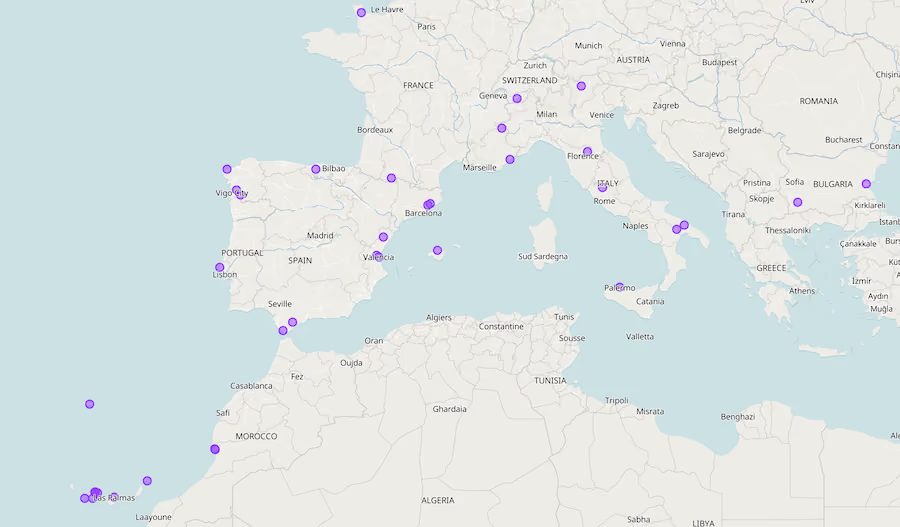
Another surprising pattern was distance from the airport.
In traditional tourism, being far from the airport is usually a disadvantage. Vacationers often want convenience. If they are only staying for a weekend or a few nights, they do not want to spend two or three hours getting from the airport to their accommodation.
But with coliving, the pattern looks different.
Some of the most interesting and popular coliving spaces are located far from major airports. In some cases, the drive can be two or even three hours. With public transport, the journey may be even longer.
At first, that seems like a problem. Who wants to travel that far?
But the answer is: people will travel far if the destination offers something special.
Coliving guests are not always looking for the fastest, easiest trip. They are often looking for a place where they can live, work, meet people, and experience a certain lifestyle for several weeks or months. The property is not just a place to sleep. It is part of the reason they are going.
This creates an interesting opportunity.
Properties in remote or less obvious locations are often much cheaper than properties in major tourist hubs. If you can buy a hotel far from the airport at a low price, create a strong brand, and attract guests for longer stays, the economics can become attractive.
In other words, distance from the airport can be a weakness for a traditional hotel but a strength for a coliving business — if the destination, community, and concept are strong enough.
This leads to one of the most important insights from the analysis: the best coliving opportunities may not be in obvious tourist destinations.
If you try to open a coliving space in a popular beach town, a major city, or a well-known holiday area, you are competing with hotels, Airbnb operators, developers, and investors. Real estate is expensive. Expectations are higher. And if the coliving model does not work, your costs may be difficult to recover.
But in less touristy locations, the purchase price can be much lower. That gives you more room to experiment. You can create a brand around the destination, the community, the lifestyle, or a specific niche.
This is where coliving can become especially interesting.
The formula could look something like this:
This model is not without risk. If you buy a property in the middle of nowhere and the coliving concept fails, it may be difficult to sell or repurpose. But if it works, the upside can be significant because your acquisition cost is low and your guests stay longer.
From the analysis, two main strategies emerged.
The first strategy is the remote, low-cost property model.
This means buying a cheap hotel or guesthouse in a less mainstream location, often far from the airport, and building a destination coliving brand. The goal is to make the property itself and the community experience strong enough that people are willing to travel there.
This approach can offer strong profitability because the real estate cost is low and the operational model is built around longer stays. But it is also riskier. If the concept does not work, you may be left with a property that is difficult to resell or operate as a conventional hotel.
The second strategy is the hybrid hospitality model.
This works better in more touristy or safer locations. In this model, the property operates as a coliving space for part of the year and switches to a more traditional hospitality model during high season.
For example, Sun and Co. in Spain has previously been discussed as a business that operated as a hostel for part of the year and as a coliving space for the rest of the year. This kind of hybrid model can make sense in destinations with clear seasonal demand.

During the lower or shoulder season, coliving can help maintain occupancy with longer-stay guests. During peak season, the property can switch to short-stay tourism, Airbnb, hostel-style accommodation, or hotel bookings.
This model may be easier to finance because the property still has conventional hospitality value. If the coliving concept does not work, the building can still be used or sold as a tourism asset.
The downside is that real estate in these locations is usually more expensive, and the business may become more complex to manage.
Another interesting pattern from the map was clustering.
In several destinations, successful coliving spaces are located very close to each other. Sometimes they are in the same town, the same neighborhood, or even on the same street.
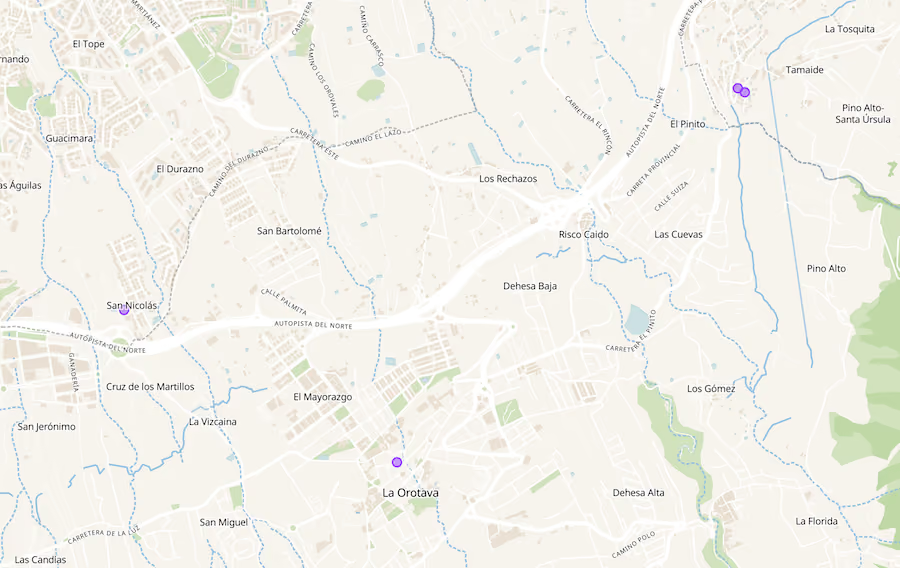
At first, this seems strange. You might expect coliving spaces to spread out and avoid direct competition. But in practice, clustering happens for a few reasons.
One possible reason is that founders see an existing successful coliving space and copy the model nearby. Another is that former guests enjoy the experience so much that they decide to open their own space in the same area. In some cases, operators may split, disagree, or create competing businesses close to the original one.
This creates an important warning for new operators.
You may think you are creating a blue ocean by opening a coliving space in an undiscovered location. But if the model works, others may copy you quickly. A destination that starts with one coliving space can soon have two, three, or more.
That does not always have to be bad. A cluster can make a destination more attractive to remote workers and digital nomads. It can create a local ecosystem. But it does mean that the concept needs to be defensible.
A successful coliving business should not depend only on being first. It needs a strong brand, strong community, good operations, and a clear reason for guests to choose it over the alternatives.
The data can show patterns around room count, location, distance from the airport, and minimum stays. But the heart of coliving is still community.
A coliving space is not just a cheap hotel with shared kitchens. The most successful spaces create an environment where people want to stay longer, meet others, and feel part of something.
That is why minimum stays matter. That is why remote locations can work. That is why small properties can compete with larger hospitality businesses. The business depends on creating a specific feeling and experience.
If the community is weak, the property becomes just another accommodation option. And if it is just accommodation, it has to compete on price, location, and convenience — which is a much harder game.
But if the community is strong, people may accept a smaller room, a longer journey, or a less obvious destination because the overall experience is worth it.
If you are looking to buy a hotel or guesthouse and convert it into a coliving space, the data suggests a few important criteria.
The property does not need to be large. In fact, many successful coliving spaces are relatively small. But it does need enough rooms to create a community and enough shared space for people to interact naturally.
The location does not need to be mainstream. In some cases, a less obvious location may be better because the property is cheaper and the brand can be built around discovery, focus, nature, surf, mountains, or another lifestyle angle.
The property should support longer stays. That means good Wi-Fi, comfortable work areas, shared kitchens or dining spaces, laundry, and a layout that helps people live there rather than just sleep there.
It also helps if the destination has a clear identity. A remote property is not enough by itself. There needs to be a reason people would want to spend several weeks there.
Finally, the business needs a fallback strategy. If the location is more touristy, the property may be able to operate as a hotel, hostel, or short-stay rental during high season. If the location is very remote, the coliving concept needs to be especially strong because resale and repurposing may be harder.
Coliving can be a difficult business, but it has a different logic from traditional hospitality.
Small properties that would be hard to operate as hotels may work as coliving spaces because guests stay longer and operations are less intense. Remote locations that would be inconvenient for tourists may work because coliving guests are looking for a deeper experience. Cheap hotels in overlooked destinations may become viable if they are repositioned around community and lifestyle.
The biggest opportunity appears to be in finding properties that are too small, too remote, or too unusual for conventional hospitality — but just right for a focused coliving concept.
That is not a guaranteed formula. The business still depends on execution, community, marketing, and choosing the right property. But the data suggests that successful coliving spaces do not always follow traditional hospitality rules.
And that is exactly what makes the model interesting.

Parlez-nous de votre stratégie d'investissement et nous vous aiderons à trouver les meilleures opportunités.
(Êtes-vous vendeur ? cliquez ici)

.avif)